
Kropsy – Smart Agriculture Platform
IoT-powered digital agriculture assistant for modern farm and crop management
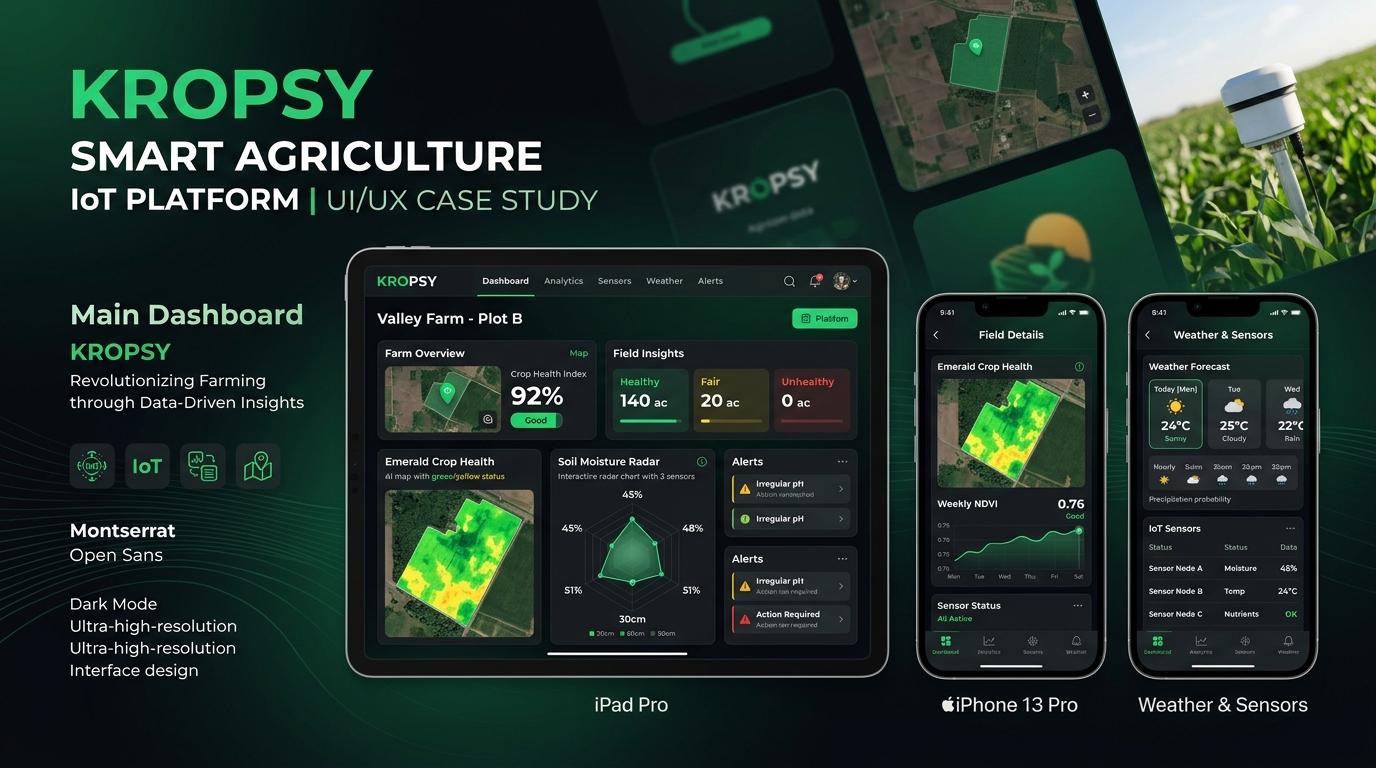
Engineered the responsive web portal and mobile app UI allowing farmers to monitor soil health, track irrigation cycles, schedule crop rotation, and receive actionable meteorological warnings.
Executive Overview & Business Impact
Kropsy bridges high-tech agricultural telemetry with rural end users who need simple, glanceable data about their fields regardless of lighting conditions or tech proficiency.
The Core Challenge & UX Friction
Translating complex IoT sensor telemetry (nitrogen levels, soil humidity percentage, pest risk algorithms) into simple, actionable visual alerts for farmers on low-cost Android hardware under direct sunlight.
The UX Solution & Information Architecture
Implemented high-contrast visual gauges, color-coded health indicators (Green/Amber/Red), intuitive weather card widgets, and an offline-ready sync pattern with minimal tap targets.
Architectural Pillars
Key Functional Screens & Deliverables
Client & Stakeholder Feedback
“Agronomists reported that even first-time smartphone users could monitor irrigation thresholds within minutes without formal training.”
Thryvex Media – Digital Marketing Agency Web Platform
Thryvex Media Pvt Ltd • Web Platforms